Best Safari Destinations in Africa for Every Budget
Find out more about the safari options in Africa, including the best safari parks, the cost of safaris and when to visit. Valuable tips for those new to safaris, families and even for experienced safari enthusiasts.
I can still hear the dust! It got me all over my face, my camera and even my teeth when we were bouncing down a corrugated track in the Serengeti. Then the guide turned off the motor. A lioness with amber eyes upon a warthog, froze in midstep. During the next 10 minutes, no movement occurred. It is the unspoken, the completely taut thing about it that I come back for. An African safari will do that to you! Goes to your skin.
However, without context the word best doesn’t mean much. Perfect for couples hoping for a private getaway with a private pool? Ideal for one person backpacking on their own in the self-driving and camping mode? Best place to see a leopard on foot? I’ve done the three. This is the handout I would want when looking to make my first trip. I’ve been in parks, both famous and obscure, throughout East and Southern Africa for weeks. The following is a personal account of the 10 places that get you the best and the worst, the crowds (as well), and the pitfalls that can end a safari.
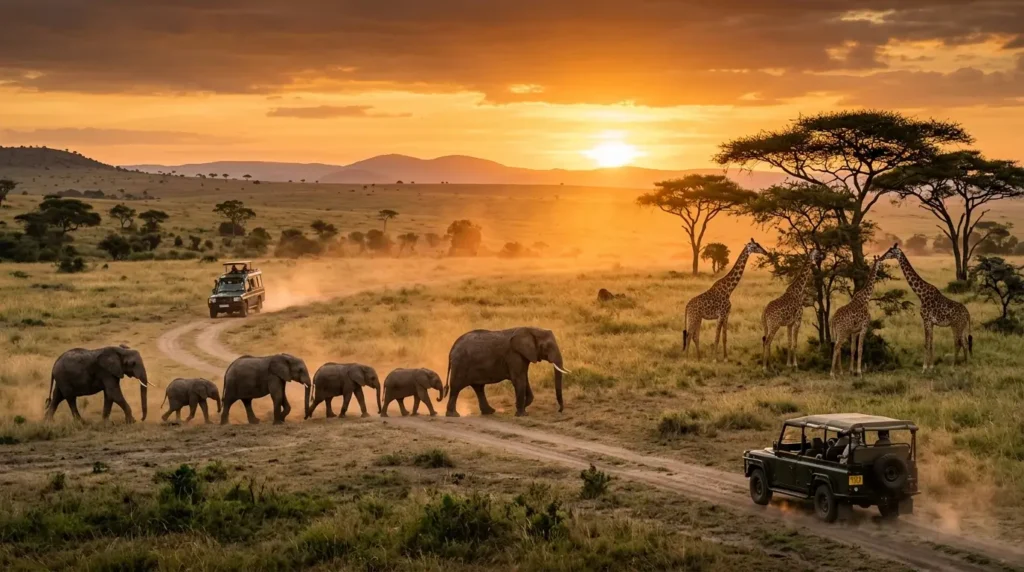
What Makes a Safari Destination Stand Out
The Big Five isn’t the only aspect of a great park. It’s regarding the frequency of extraordinary events. It’s about the caliber of the guides, the diversity of landscape and if you can afford to go there at night. There are four things I use to measure a location.
- Reliability of sightings. You’re wasting valuable time and money. You don’t want three days with more than one dusty elephant.
- Variety of approaches to exploring. Can you walk? Do you have experience driving off-road? Night drives? Boat safaris?
- Range of accommodation. The same park should provide a $50 rest camp hut and a $2,000 luxury tent.
- Accessibility. What is the difficulty in reaching it and what are the inside logistics?
Serengeti National Park, Tanzania
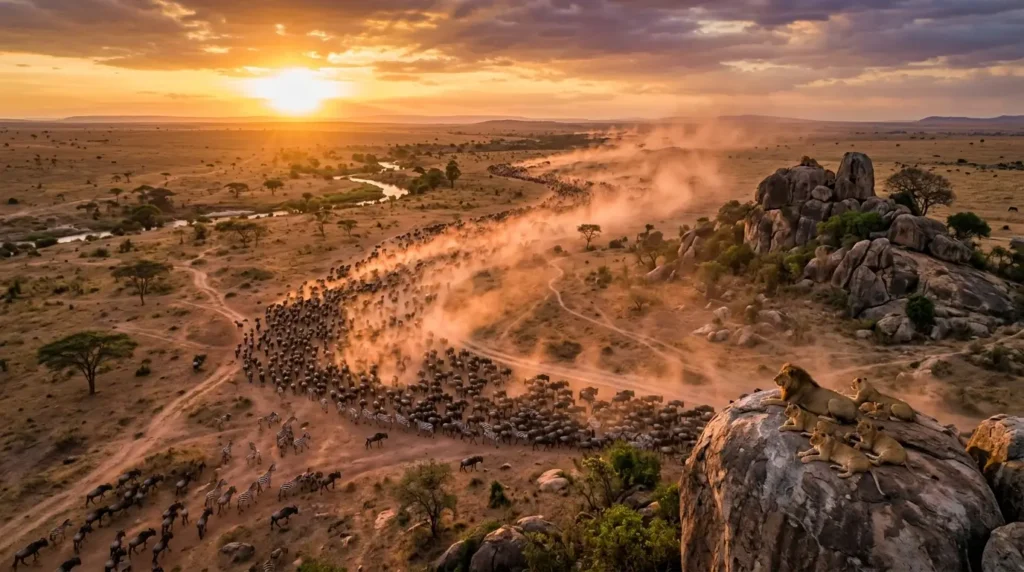
The Serengeti is my favorite park that I never get disappointed from. Its name evokes infinite golden lands, full of acacia trees. There’s absolutely no end to the wildlife. Lions lie on kopjes, cheetahs peer at the grass while 1.5 million wildebeest and zebra make a ceaseless circuit.
The Migration and Where to Be
The migration is not a one-off occurrence. The southern part of Ndutu is a herdscape of calving wildebeest in January–March. The herds move west to the Grumeti River by June then in the north for the Mara River crossings from July to October. I had the privilege of spending three days in the Kogatende region one August watching wildebeest throw themselves into crocodile-infested waters. It was ugly, wild and indelible.
Crowds and How to Beat Them
At 14,750 km² the Serengeti is huge, but the famous crossings are like magnets which pull in vehicles. At one time I saw more than 50 cars. The answer is easy: remain inside a private conservancy adjacent to the park, such as Grumeti or Singita. Well there you can find off road driving, night drives and just a few cars.
- Best season: June–October for crossings; January–March for calving
- Cost: $200 per night (basic mobile camp) to $2,500+ (luxury lodge)
Maasai Mara National Reserve, Kenya
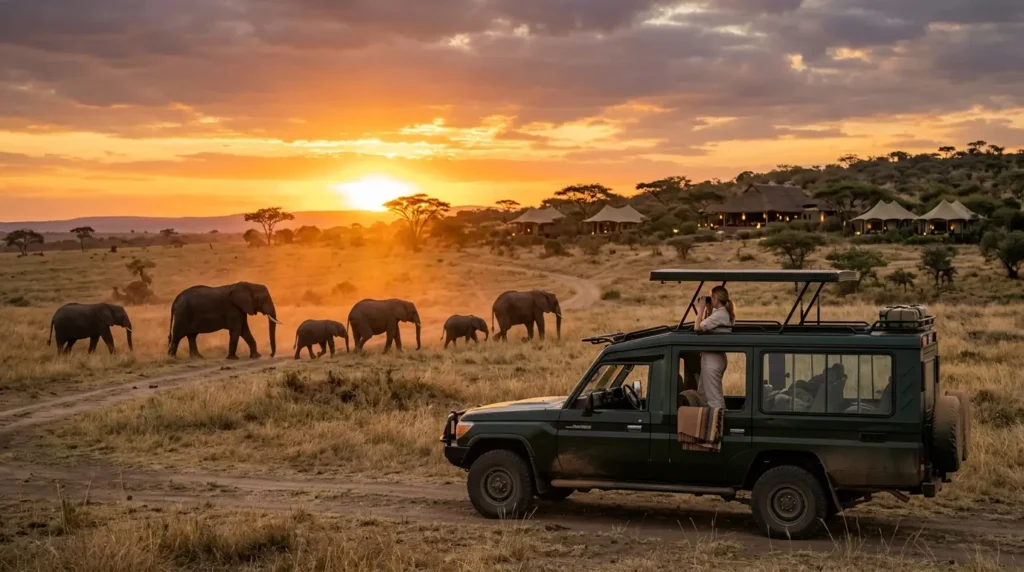
The Mara is the little sibling of the Serengeti, but not for lack of personality. It spans only 1,510 square kilometres but during the migration season, from August till October, its river crossings and the density of lions during this period is the highest in Africa. In the Mara North Conservancy, once, I witnessed five lionesses downing a buffalo, with no other car in sight.
Conservancy vs Main Reserve
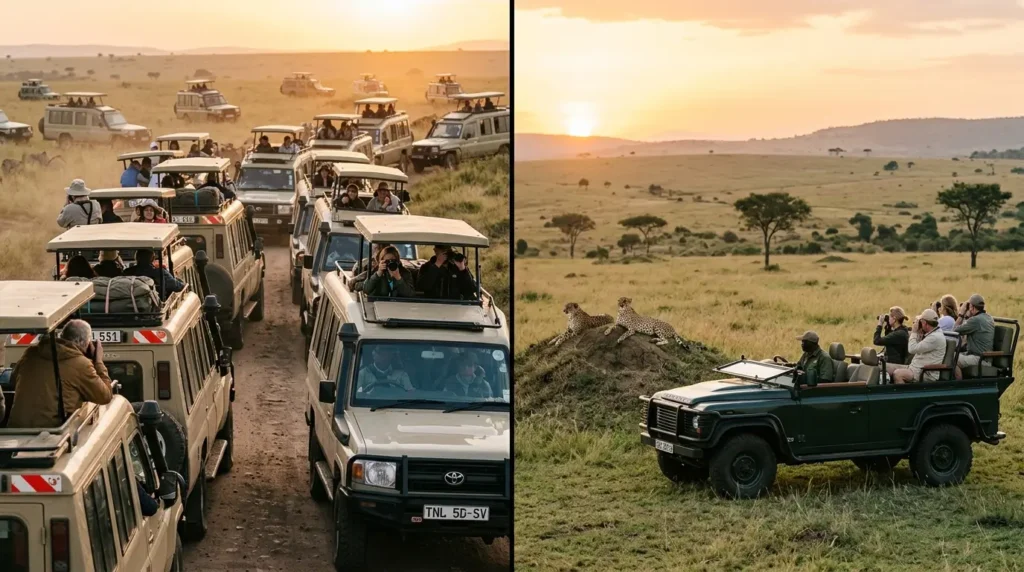
The main reserve is congested and tight. No off-roading. No night drives. Minibuses scoot to-and-fros between sightings. I don’t eat it at all anymore. Other conservancies, such as Mara North and Olare Motorogi, have a vehicle cap, and offer the opportunity for a guided hike. They’re more expensive, but it’s worth it when you see them with one other jeep, rather than twenty.
- Best time: July to October for migration season; big cats can be spotted throughout the year
- Cost: $150 (basic camp outside reserve) to $1,500+ (conservancy lodge)
Kruger National Park, South Africa
Kruger is the king of the do-it-yourself safaris. I did go there for the first time in a rented Toyota and with a cooler box of steaks in tow. There are more than 2,300 kms of tar and gravel roads for self-driving in the park. No guide needed. Government rest camps come in at as low as $50 a night, along with a braai. It is an ideal location for self proficiency in spotting game.
Private Reserves for the Good Stuff
Private reserves, such as Sabi Sand and Timbavati, lie on the west of the park, attached to the property of Kruger. The Sabi Sand is fabled with leopards. The animals have become so accustomed that it is possible to see a leopard stalk impala from a few metres away. In one morning drive I spotted four different leopards. It is uncommon to see a leopard in the main Kruger but in Sabi Sand it is virtually a certainty. The price is the downside here — stay at one of these lodges is $600/pp/night.
- Best time: May–September (dry season, low vegetation)
- Cost: $50 (rest camp hut) to $1,500+ (private lodge)
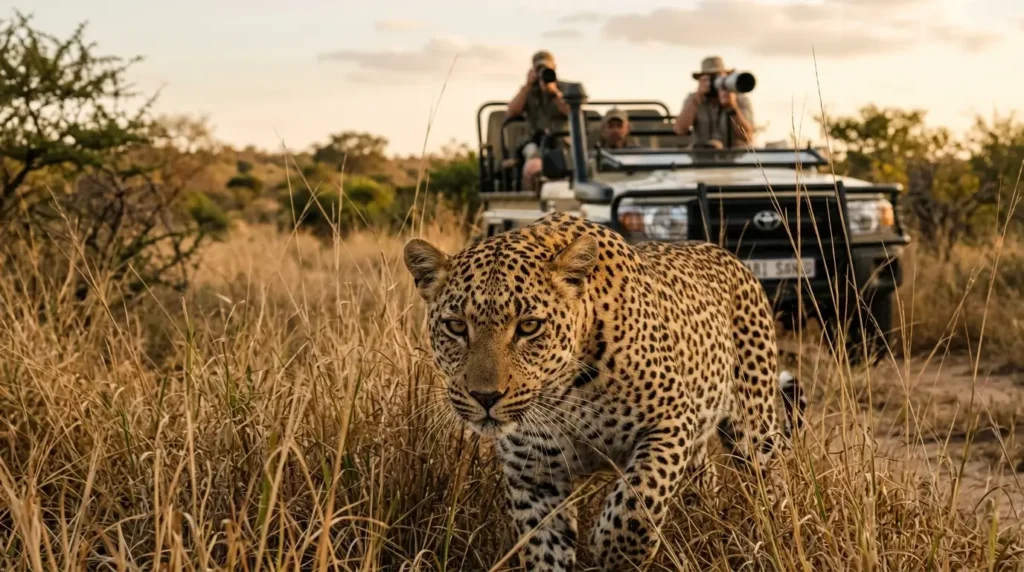
Okavango Delta, Botswana
The Okavango Delta is a miracle! Each year, floodwaters from Angola flow into the Kalahari Desert forming a maze of channels and islands. The safaris are done here by foot or mokoro (a dugout canoe poled through reeds). You are walking to find elephants, giraffes and the rare sitatunga antelope, on the islands. It’s private, upscale, and very pricey.
Botswana intentionally maintains low levels of visitors, but with high costs and low impact. I spent four nights in a camp in the Moremi Game Reserve. One morning we followed African wild dogs on their trail, and the next we spotted a pangolin of African sightings. I have never been guided by any better. The only drawback was the expense. My four nights in the camp are more expensive than my two weeks in Kruger on self drive.
- Best time: June to October (when floodwaters arrive, game is found in islands)
- Cost: $600 to $3,000+ per person per night
- Access: Fly to Maun and then by light aircraft to the airstrip of your camp.
South Luangwa National Park, Zambia
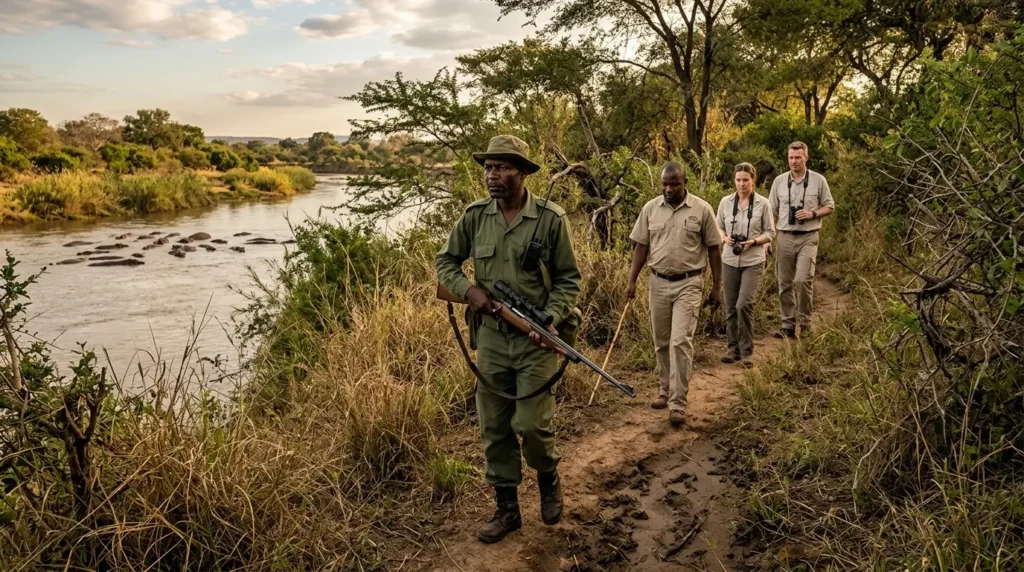
The walking safari was invented by South Luangwa. The park is bordered by the Luangwa River, where ebony forests grow luxuriantly and leopards abound. I walked with a track reading guide and armed scout. On foot we walked to a hippo pod, heart pounding. It was raw and uncanny.
The camps here are not as large and glamorous as those in Botswana, but the standards are extremely high. It is also cheaper. Mid range bush camps are approximately $250 per night. Animals are drawn to the river during the dry season (from July to October), making sightings occur with greater frequency.
- Best time: July through October
- Cost: $250 (mid-range camp) to $800+ (luxury)
- Access: By air to Lusaka and then fly to Mfuwe.
Etosha National Park, Namibia
Etosha is a harsh salt-pan environment, which resembles another planet. This is a game centred on waterholes that are lit for the game. Just park it, sit and wait. Elephants, rhinos, giraffes and lions come to drink a parade at times. I had to wait for hours at Okaukuejo waterhole to see a black rhino come out at dusk. It was relaxing and didn’t need any driving.
Namibia has a very good infrastructure for self drivers. The road is paved with gravel and rest camps are clean and cheap. I can say that only in South Africa I would recommend a full self drive safari.
- Best time: June–October
- Cost: $60 (rest camp chalet) to $300+ (private lodge outside park)
- Access: Air: Windhoek, 5 hours’ drive north.
Volcanoes National Park, Rwanda
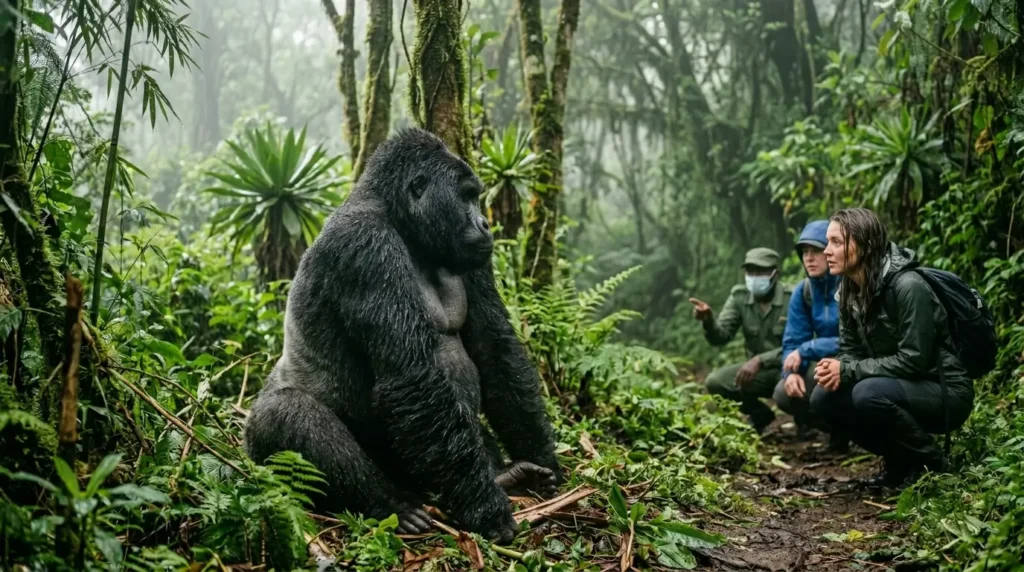
No game drive safaris in this area. You trek to see mountain gorillas in the Virunga Mountains’ Volcanoes National Park. The price of a gorilla permit in Rwanda is USD 1,500 per person. It was a lot of money, and I didn’t want to give it to them. I then sat in a rainforest opening for an hour as a silverback watched from 2 metres away. He was very large and gentle, and made noises that sounded like deep purring. I completely forgot about the money.
This is similar to what you can do in Bwindi Impenetrable Forest, Uganda for $700. The slope is much steeper, but all the gorilla families are equally accustomed.
Also Read: Couples Dive: Scuba Diving Vacation Packages For Couples 2026
- Best time: June to September or December to February (drier trails)
- Cost: $1,500 (permit) + $200 (basic lodge) to $1,500+
- Getting there: Via air to Kigali and then a 2 hour drive to Musanze.
Ngorongoro Crater, Tanzania
The Ngorongoro Crater is the largest intact caldera in the world, a grasslands bowl in which 25,000 large animals reside. The Big Five are available to see in one morning. Within three hours, I saw a serval hunting in the swamp, and a lioness nursing cubs on the road around the rim of the crater.
The drawback is the crowds. Dozens of vehicles are fighting it out on the crater’s floor at viewings. Come at 6 a.m. when the gate opens to beat the brunt of it. As for the crater, see it for one day only, and enjoy the view from a lodge on the rim.
- Best time: All year round, but dry season (June–October)
- Cost: $300 (rim lodge) to $1,000+
- Access: Fly into Kilimanjaro and drive or fly to Manyara airstrip.
Mana Pools National Park, Zimbabwe
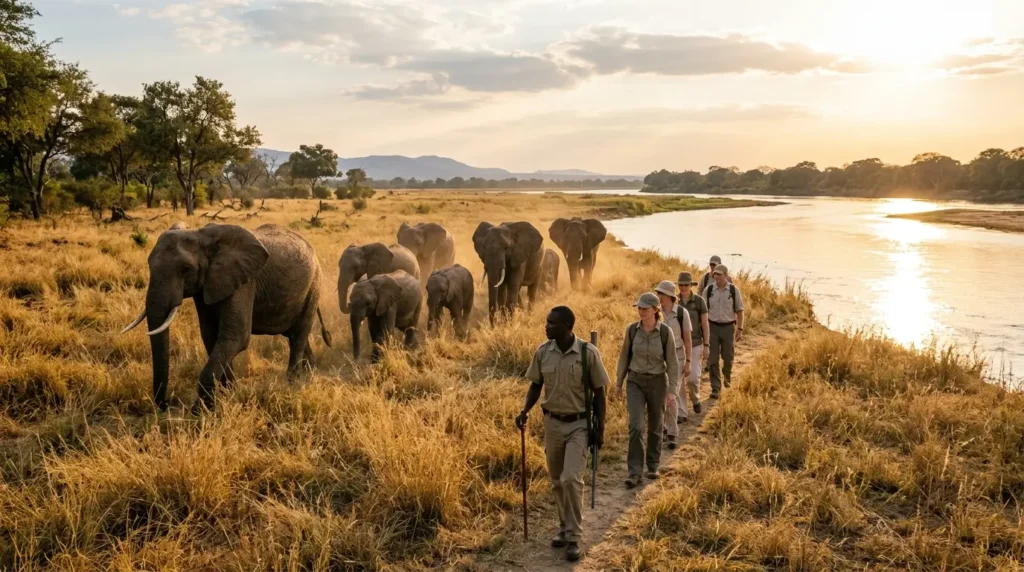
Mana Pools is for safari enthusiasts. Walk and play unguided with the elephants that stand on their hind legs to eat acacia pods along the floodplains of the Zambezi River, a UNESCO World Heritage Site. It was there that I hiked on new lion tracks, accompanied only by an armed ranger. It’s the most intimate and unprocessed of safaris that I know.
The camps are small in size and non-pretentious and you can canoe past hippos and buffaloes. Not a park for first timers. A taste for adventure and a good dose of courage are required. However, if you’re looking for wild and uncrowded Africa, then it’s for you!
- Best time: June to October
- Cost: $400 to $1,000+ per night
- Getting there: Take a plane to Harare and then get on a charter flight to the park airstrip.
Hwange National Park, Zimbabwe
Hwange is Zimbabwe’s biggest park and a stronghold for elephants. I went to a hide at a pumped waterhole and saw more than 300 elephants on one afternoon. The park is overlooked, and therefore has lower prices than Botswana or Tanzania for similar wildlife.
Vehicles are restricted by the concession system so you seldom share a sighting. There is outstanding guiding and many camps have a strong conservation heritage. Hwange complements Victoria Falls, which is only a few minutes’ drive away.
- Best time: August–October (hottest months, best game at waterholes)
- Cost: $200 (basic camp) to $800+ (luxury lodge)
- Getting there: Fly into Victoria Falls, drive or take a charter.
How to Choose Your Safari Destination
Follow this decision flow in order to match your priorities with the appropriate park.
Budget per person per day
- $250 or less: Kruger self drive, Etosha, Maasai Mara basic camps
- $250–$600: Serengeti semi-luxury, South Luangwa, Hwange
- $600+: Okavango Delta, Sabi Sand, gorilla trekking
Safari style
- Self-drive: Kruger, Etosha
- Guided safaris: Most parks
- Walking safaris: South Luangwa, Mana Pools, private conservancies
- Boats and canoes: Okavango Delta, Mana Pools
Must-see animal
- Big Five: Ngorongoro, Sabi Sand, Etosha
- Great Migration: Serengeti, Jan–Mar calving, Jul–Oct crossings; Maasai Mara, Aug–Oct
- Wild dogs: South Luangwa, Mana Pools, Botswana North
- Gorillas: Rwanda (Volcanoes) or Uganda (Bwindi)
- Leopards: Sabi Sand, South Luangwa
First-time safari
- Kruger (self-drive) or Serengeti (guided)
Safari Costs at a Glance
| Budget Tier | Per Person Per Day | Example Parks |
|---|---|---|
| Budget | $80–$200 | Self drive in Kruger, Etosha, Maasai Mara budget camps |
| Mid-Range | $250–$600 | Serengeti, South Luangwa, Hwange |
| Luxury | $700+ | Okavango Delta, Sabi Sand, private conservancies |
These are prices that cover hotel, food, activities and admission to the park. International flights, tips and visas are additional.
Common Mistakes That Hurt Your Safari
- Staying too short. I never stay less than 3 nights at a camp. Time is needed to pace the rhythm of the bush.
- Packing bright clothes. White and blue spook game. Only khaki, olive and brown.
- Failure to follow the guide’s car restriction. Some camps will try to fit 6 guests into a row. Before booking I always ask: “Max four per vehicle, right?”
- Skipping malaria prophylaxis. The majority of prime safari destinations are prone to malaria. A visit to a travel clinic is mandatory.
- Underestimating transit times. Five hours can be spent driving in the bush for 200 kilometres. If finances permit, fly between parks.
Health and Safety Essentials
Malaria poses the greatest health threat. I take a prophylactic, apply DEET repellent. If you are travelling from a yellow fever endemic country to Tanzania, Rwanda or others, you will need to carry a yellow fever certificate. Follow the CDC or WHO recommendations prior to the trip. Helicopter evacuation is required for travel insurance, and a medical helicopter lift from a remote camp could cost $50,000.
When used properly, safaris can be safe. Avoid strolling around your camp in darkness without an escort. Do not leave vehicles on game drives. Avoid intruding into the wildlife zone: a buffalo can flip a car.
Tipping Culture
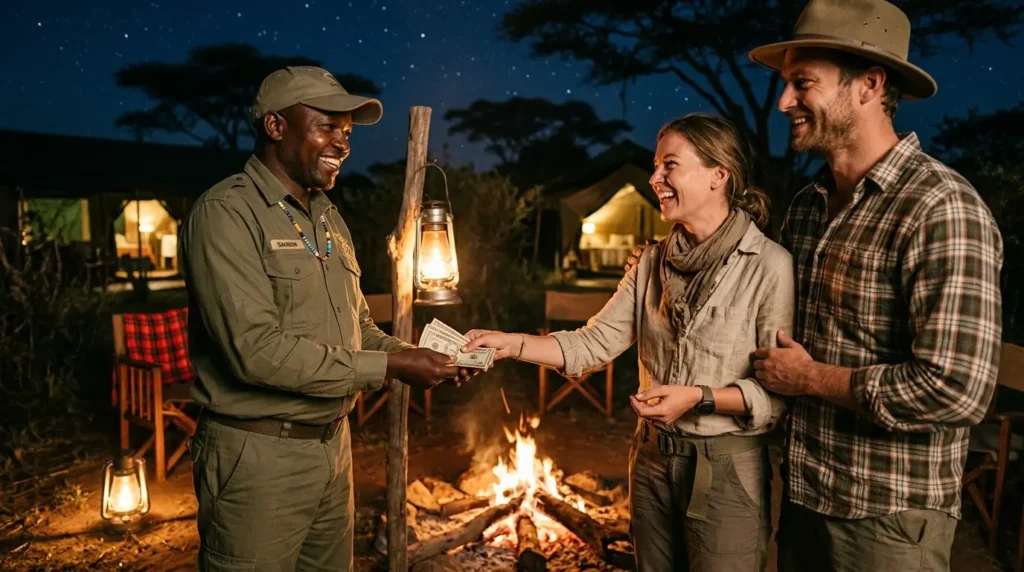
Tipping is expected. I share tips with camp personnel ($10 per guest per day) and tip the guide separately ($15–$20 per guest per day). Porters and transfer drivers get $1–$2 per bag. Have small bills of U.S. money.
Frequently Asked Questions
Which African Country Has the Best Safari?
It depends. The day for first timers is the one in South Africa (Kruger). Tanzania and Kenya for the Great Migration. Zambia and Botswana are the best choice for exclusivity and walking.
How Much Does an African Safari Cost?
Self-drive is between EUR 100 and EUR 120. $80 per person per day. Mid-range guided safaris run $250–$600. The cost of luxury camps are $700 to $3,000+ per night.
Is Safari Safe for Families?
Yes. A number of lodges also provide family accommodations and kids activities. There are game drive age limits (typically 6 years) and walking safaris age limits (typically 12 years).
When Is the Best Time to See the Great Migration?
From July to October in Tanzania, when crossing the Mara River, and October to May in Kenya, when crossing the Mara in the Maasai Mara. Calving in southern Serengeti: January–March.
Do I Need a Yellow Fever Certificate?
If you are coming from a yellow fever endemic country, you should have one. Some countries such as Tanzania and Rwanda in Eastern Africa verify certificates at their borders.
Can I Combine Gorilla Trekking with a Safari?
Yes. Take an air flight to Kigali, go gorilla trekking in Volcanoes National Park and then head down to the Serengeti or Kenya for the savannah safari. This is a popular and powerful duo.
What Is the Difference Between a National Park and a Conservancy?
National parks are government-owned, meaning that there are strict rules in place, such as no off-road driving, no night driving etc. Conservancies are privately or community-owned land for more exclusive and flexible wildlife viewing.
Is There a Malaria-Free Safari Option?
Yes. Low-risk areas or malaria free areas are Madikwe Game Reserve and Waterberg in South Africa and portions of the Namibian coast. Great for families with small children.
The Bush Stays With You
Around campfire I sat in 6 countries of Africa, listening to hyenas howl in darkness. Every park is unique, every park has its own flow. The Serengeti is a vast stage. The Okavango is a babbled river. Kruger is an adventure through hands-on experience. Mana Pools is heart pure.
Begin at the budget and the one animal encounter you cannot, will not miss! Next choose one of the parks from this list that aligns. Book flights and accommodation up to nine months in advance for the dry season. Bring those neutral garments, binoculars, and get dusty. The rest will be up to the continent.