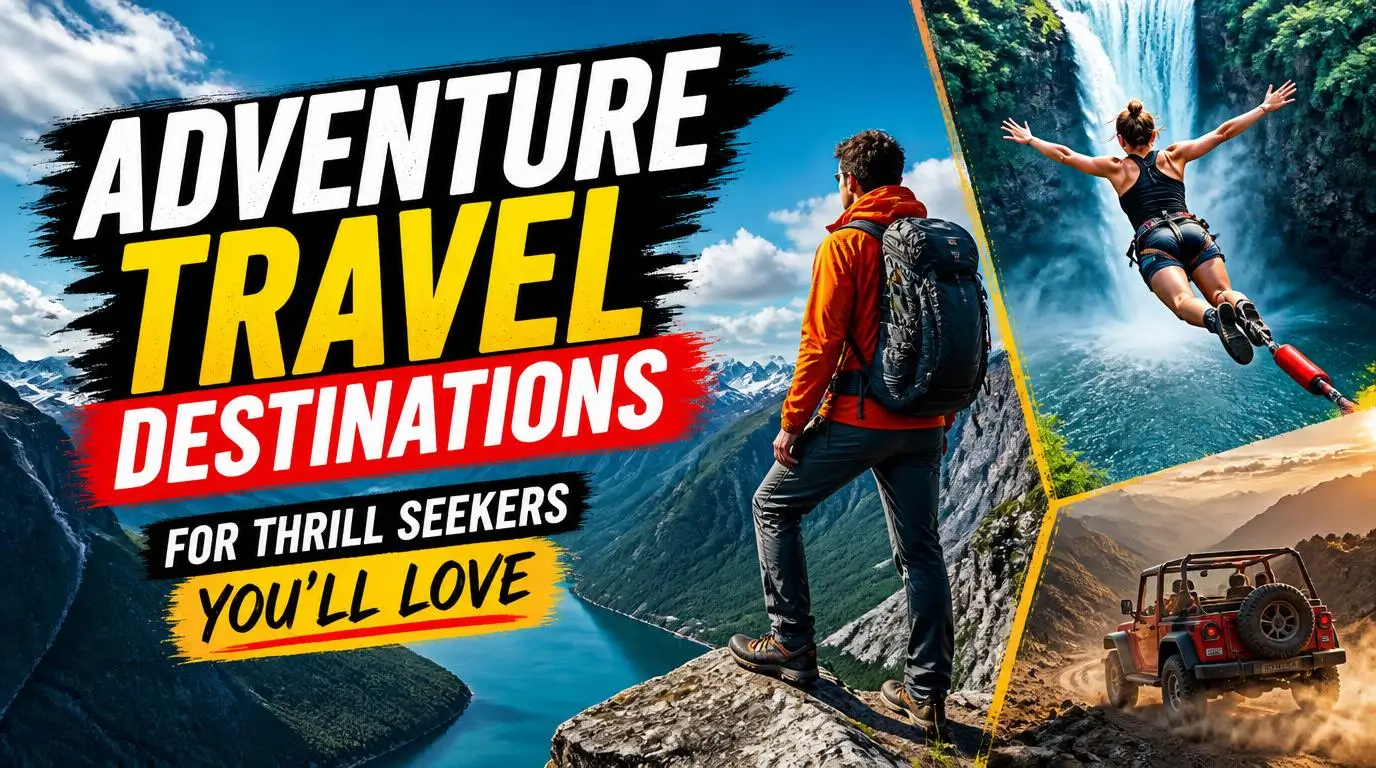
The best adventure travel destinations for thrill seekers are not hiding on some secret website. They are out there right now waiting for someone brave enough to show up. Maybe a little reckless, too. I spent the last eight years chasing adrenaline across six continents. I slept in questionable hostels and said yes to things that probably should have scared me more than they did. Some trips changed me. A few almost broke me. Every single one was worth it.
1. Queenstown, New Zealand
Queenstown basically invented modern adventure tourism. The town sits on the edge of Lake Wakatipu with the Remarkables mountain range right behind it. The whole place runs on adrenaline the way other towns run on coffee. I bungy jumped off the Kawarau Bridge here. That is the original commercial bungy site. The 43-meter drop felt like it lasted three lifetimes. Beyond bungy you can go jet boating through the Shotover Canyon or skydive over the lake. You could also hit the Routeburn Track for a multi-day hike that will wreck your legs in the best possible way. Even the scenic gondola ride comes with a luge track at the top. The town is compact enough that you can walk between most activity operators. The food scene has gotten seriously good over the last few years too. If you only visit one place on this list, make it this one.
2. Interlaken, Switzerland
Interlaken sits between Lake Thun and Lake Brienz with the Swiss Alps towering behind it. This is the European capital of outdoor thrills. I went canyoning here with Outdoor Interlaken. Jumping off rock ledges into glacial pools while waterfalls blasted my face was one of the wildest mornings of my life. Paragliding is the signature experience. You launch from Harder Kulm and soar over both lakes with the Eiger and Jungfrau staring you down. A tandem flight costs around 170 to 200 CHF. Every single franc is justified. Skydiving from 14,000 feet with those Alps beneath you is a different level entirely. The town itself is small and walkable. The hostels are solid and Balmers is legendary. The Swiss train system makes getting here painless from Zurich or Geneva.
3. Moab, Utah, USA
Red rock desert and slot canyons surround you here. Two national parks sit within a 30-minute drive. Moab is raw gritty adventure without the polished tourist veneer. I mountain biked the Slickrock Trail and it humbled me completely. The sandstone feels like riding on the surface of Mars. One wrong turn sends you sliding toward a ledge you really do not want to slide toward. Arches and Canyonlands National Parks frame the town. You can go rock climbing or off-roading on Hell’s Revenge. Whitewater rafting the Colorado River through canyons that glow orange at sunset is another option. The Fiery Furnace in Arches requires a permit and a ranger-led hike. It is worth the planning though. Spring and fall are the best seasons. Summer temperatures regularly hit 105°F. Trust me, nobody wants to climb sandstone in that kind of heat. Moab rewards people who like their adventure a little dusty and unfiltered.
4. Costa Rica’s Pacific Coast
Costa Rica has been on the adventure travel map for decades. The Pacific coast from Manuel Antonio up to the Nicoya Peninsula remains one of the most reliable thrill-seeker corridors in the Americas. I spent two weeks here surfing and zip-lining. I also did something called coasteering that involved jumping off sea cliffs into the Pacific. Arenal Volcano anchors the interior with rappelling down waterfalls and white-water rafting on the Pacuare River. National Geographic once named that river one of the best rafting spots on earth. The surf in Santa Teresa is excellent for intermediates. The jungle zip-line tours in Monteverde are the real deal and not the watered-down tourist versions you find in other countries. Costa Rica also makes logistics easy. Roads are decent and English is widely spoken. The exchange rate keeps things affordable. You can go from rainforest canopy to ocean within a few hours.
5. The Adventure Travel Destinations for Thrill Seekers in Southern Africa
Southern Africa delivers adventure on a scale that nowhere else can match. Victoria Falls alone would justify the trip. The region just stacks experience on top of experience. I stood on the edge of Devil’s Pool at Victoria Falls during dry season. I looked 100 meters straight down into the gorge while the Zambezi River roared around me. Then I bungee jumped off the Victoria Falls Bridge. That bridge sits 111 meters above the Batoka Gorge and connects Zambia with Zimbabwe. That jump is the single most terrifying thing I have willingly done. Beyond the falls you have options. Kruger National Park in South Africa offers self-drive safaris where you share dirt roads with elephants. Cape Town serves up shark cage diving in Gansbaai along with paragliding off Lion’s Head. The Drakensberg Mountains are wildly underrated for hiking and rock climbing. Flights into Johannesburg or Cape Town are straightforward from most international hubs. Once you are there, domestic flights and rental cars make the region surprisingly accessible.
6. Patagonia, Argentina and Chile
Patagonia is where adventure travel gets serious. The wind alone will test you. I hiked the W Trek in Torres del Paine and spent one full day walking sideways because gusts were hitting 60 mph. It was miserable. It was also the most beautiful landscape I have ever seen. The granite towers and turquoise lakes look fake in photos. They somehow look even more unreal in person. Perito Moreno Glacier near El Calafate is a living cracking wall of ice. You can actually walk on it with crampons. Rock climbing in El Chaltén draws serious alpinists from around the world. Kayaking near the glaciers is hauntingly quiet and cold. Getting to Patagonia takes effort. Fly into Buenos Aires or Santiago and catch a connecting flight south. The season runs October through March. Book refugios on the W Trek months in advance because they fill up fast. December and January are the worst for availability. Patagonia does not hand you anything easily. That is exactly why it feels so rewarding.
7. Nepal
You do not have to summit Everest to find adventure in Nepal. The Annapurna Circuit and Everest Base Camp treks are world-class. The country offers so much more than hiking though. I went paragliding in Pokhara and launched from Sarangkot with Machapuchare filling my entire field of vision. The flight lasted about 30 minutes and cost around $80. That felt almost criminal for how good it was. White-water rafting on the Trisuli River is a solid full-day trip. Bungee jumping at The Last Resort near the Tibetan border sends you 160 meters into a gorge. Mountain biking around the Kathmandu Valley gives you temple views mixed with dirt trails. The food will fuel you through anything. Dal bhat is a particular favorite of mine. Nepal is also extremely budget-friendly. A full day of adventure often costs less than a single meal in Switzerland. The people are warm and the tea houses along trekking routes are cozy. The altitude will remind you very quickly that you are human.
8. Iceland
Iceland feels like another planet. Volcanic landscapes and glaciers keep you on edge. The weather changes every 15 minutes in the best way possible. I ice-climbed on Sólheimajökull glacier with a guide from Arctic Adventures. Chopping into ancient blue ice while standing on a glacier tongue that is actively retreating gave me a strange mix of awe and sadness. Snorkeling Silfra in Thingvellir National Park puts you between the North American and Eurasian tectonic plates. The water is so clear you can see over 100 meters. The visibility is unreal. You can also go snowmobiling on Langjökull or explore lava tube caves. Riding Icelandic horses through volcanic fields is another great option. The Golden Circle route is beautiful but crowded. The real magic happens on the less-traveled Westfjords or the Highlands. You just need a proper 4×4 and some confidence on F-roads to get there. Iceland is expensive with no way around it. Splitting a campervan rental with friends makes it manageable though.
9. Borneo, Malaysia
Borneo rarely appears on mainstream thrill-seeker lists. That is exactly why it deserves a spot here. The Malaysian states of Sabah and Sarawak offer jungle adventure that feels wild. Nothing about it feels manufactured. I climbed Mount Kinabalu. It is the highest peak in Southeast Asia at 4,095 meters. I started at 2 AM to reach the summit for sunrise. The via ferrata across the granite face is one of the highest in the world. It will absolutely test anyone who is even slightly uneasy with heights. Below Kinabalu the Danum Valley holds 130 million years of unbroken rainforest. Night walks here put you face to face with slow lorises and flying squirrels. You will also see enough insects to fill a textbook. River tubing through jungle caves in Mulu National Park is surreal. You float in darkness with only a headlamp while bats swirl above you. Borneo delivers a rawer adventure experience than almost anywhere in Southeast Asia. It is still largely under the radar.
10. Colombia
Colombia has transformed over the last 15 years into one of South America’s most exciting adventure destinations. The country offers diversity that catches people off guard. You get Caribbean coastline and Andean peaks leading right into Amazon jungle. I paraglided over the Chicamocha Canyon near San Gil. The canyon is deeper than the Grand Canyon. That fact hits differently when you are dangling from a paraglider above it. San Gil is Colombia’s adventure hub. Rafting on the Río Fonce and caving in Cueva del Indio are both within easy reach. You can also rappel waterfalls right outside town. The Lost City Trek is a 4-day jungle hike to pre-Columbian ruins older than Machu Picchu. It sees a fraction of the foot traffic. Medellín has excellent paragliding too. The coffee region offers multi-day horseback rides through incredibly green hills. Colombia is affordable and the people are incredibly hospitable. The street food will change your understanding of empanadas.
Frequently Asked Questions
What are the safest adventure travel destinations for thrill seekers?
New Zealand and Iceland consistently rank among the safest options. Switzerland is right there with them. These countries have strict safety regulations for adventure activities. They also have well-trained guides and reliable emergency infrastructure. Costa Rica scores well for safety in the adventure tourism space too. Always book with licensed and insured operators regardless of where you travel. Check recent reviews on platforms like TripAdvisor or Google before you commit.
How much should I budget for an adventure trip?
It depends heavily on the destination. Nepal and Colombia run $30 to $60 per day including activities. Iceland and Switzerland can easily hit $200 to $400 per day. Budget roughly $50 to $150 per individual adventure activity. Flights are usually your biggest single expense. Shoulder season travel saves money and avoids peak crowds. That means looking at March through May or September through November in most places.
Do I need to be extremely fit for these destinations?
Not for most activities. Bungy jumping and paragliding require minimal fitness. Zip-lining is the same. Multi-day treks like the W Trek or Everest Base Camp need solid cardiovascular fitness. You should do some training beforehand. Mountain biking and canyoning require moderate fitness. Be honest with yourself about your level. Talk to tour operators before you book. Most will tell you exactly what is needed.
What’s the best travel insurance for adventure activities?
World Nomads is the go-to for most adventure travelers. Their policies specifically cover activities like bungee jumping and scuba diving. Trekking at altitude is covered too. SafetyWing is another solid option for longer trips. Always read the policy details carefully. Some standard travel insurance plans exclude extreme sports. This can include surprisingly common activities like motorbiking or glacier hiking.
When is the best time of year to plan an adventure trip?
It varies by destination. Patagonia and New Zealand are best from November to March. The trekking season in Nepal peaks in October and November. Iceland works best from June through August for most activities. Ice climbing and northern lights are winter draws though. Research your specific destination before you book. Showing up during monsoon season or extreme winter can shut down entire regions.
Conclusion
Every place on this list gave me something different. I conquered new fears and saw landscapes that rewired my brain. I also picked up stories I still tell at dinner parties. The world is stacked with places that want to push you out of your comfort zone. You just have to be willing to show up. So which destination is calling your name first?