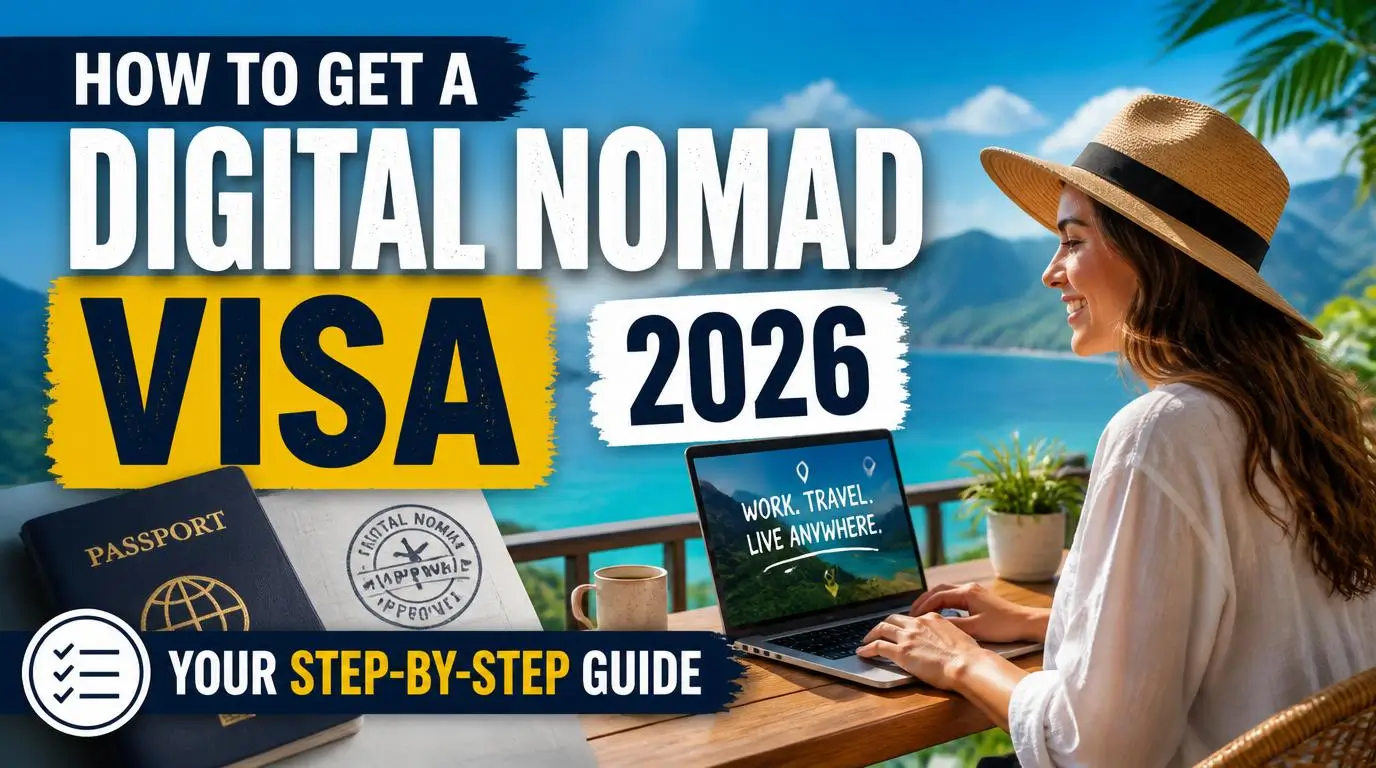
Figuring out how to get a digital nomad visa 2026 felt overwhelming the first time I tried it. I stared at government websites in broken English, downloaded wrong forms, and nearly missed a deadline that would have cost me months. But after successfully applying for visas in three different countries, I can honestly say the process is way more straightforward than it looks. You just need someone to walk you through it without the bureaucratic nonsense. That’s what I’m here for.
Decide Which Country Actually Fits Your Life
Not every digital nomad visa is created equal. Some countries want proof you earn $2,000 a month. Others want $3,500 or more. A few require health insurance from specific providers. And the tax implications vary wildly.
Before you start filling out applications, sit down and get honest with yourself about a few things. What’s your actual monthly income? Do you need reliable high-speed internet for video calls, or can you work mostly async? Are you bringing a partner, kids, or a pet? These details narrow your list fast.
I personally used Nomad List and the official government immigration portals side by side when comparing options. Portugal’s D8 visa looked perfect on paper, but the income threshold and processing timeline didn’t match my situation. I ended up going with Croatia first because their requirements were simpler and the turnaround was faster.
Some of the strongest options heading into 2026 include Portugal, Spain, Greece, Costa Rica, Thailand, Malaysia, and several Caribbean nations like Barbados and Curaçao. Each one has updated their programs recently, so always check the latest requirements directly on the country’s immigration website. Don’t rely on a blog post from 2023.
Check the Income and Employment Requirements
This is where most people trip up. Every digital nomad visa program sets a minimum income threshold, and they want you to prove it. We’re not talking about a screenshot of your PayPal balance. They want bank statements, tax returns, employment contracts, or client invoices covering several months.
For 2026, typical monthly income requirements range from about $1,500 (places like Albania or Georgia’s freelancer-friendly setup) all the way up to $3,500 or more for Spain and Portugal. Some countries calculate it annually, so do the math both ways.
Here’s what caught me off guard during my first application: freelancers and self-employed folks often need extra documentation. If you work for a remote employer, a signed letter from your company stating your role, salary, and confirmation that you can work remotely usually does the trick. If you’re freelance, prepare three to six months of bank statements plus your most recent tax filing. I also included active client contracts just to strengthen my case.
One more thing. Several countries explicitly require that you do NOT work for a local company or serve local clients. Your income has to come from outside the country. Violating this can void your visa.
Gather Your Documents Early (Seriously, Do This Now)
I cannot stress this enough. Start collecting documents at least two months before you plan to apply. The paperwork seems simple until you realize your apostille takes three weeks, your background check needs to come from a specific agency, and your health insurance policy doesn’t meet the country’s exact coverage minimums.
Here’s a general list of what most digital nomad visa applications require:
- Valid passport with at least 6 to 12 months of remaining validity
- Completed visa application form
- Proof of income (bank statements, tax returns, contracts)
- Health insurance with coverage in the destination country
- Clean criminal background check, often apostilled
- Proof of accommodation (rental agreement, hotel booking, or invitation letter)
- Passport-sized photos meeting specific dimension requirements
Some countries, like Spain with its new digital nomad visa, also want proof of your relationship with your employer or clients, and they may require documents to be translated into the local language by a certified translator. Portugal’s D8 visa requires NIF registration (a Portuguese tax number), which you can get through a fiscal representative before you even arrive.
I made the mistake of assuming my U.S. health insurance would qualify for Croatia. It didn’t. I had to buy a separate policy through SafetyWing, which actually ended up being cheaper and covered me across multiple countries. IMO, SafetyWing or Genki are the two best options for nomads applying for these visas in 2026.
How to Get a Digital Nomad Visa 2026: The Application Process
The actual application process differs by country, but most follow a similar flow. You’ll either apply online through a government portal, submit documents at a local consulate or embassy in your home country, or apply in-person after arriving on a tourist visa (a few countries allow this).
Step one is always creating an account or booking an appointment. Countries like Portugal and Spain use online scheduling systems for consulate appointments, and slots fill up fast. I’m talking weeks of waiting in some cities. Book your appointment the moment you have your documents ready.
Step two is submitting everything. Double-check every single document. I once had an application delayed because my background check was dated 91 days prior and the cutoff was 90 days. That one day cost me three extra weeks. Print copies, bring originals, and have digital backups on your phone.
Step three is paying the application fee. These range from free (Georgia) to around €75 for Portugal to over $200 for some Caribbean programs. Most accept credit cards or bank transfers. Keep your receipt.
Step four is waiting. Processing times vary from a couple of weeks (Croatia was fast for me) to three months or longer (Portugal’s D8 is notoriously slow). Some countries let you track your application status online. Others leave you refreshing your email like it’s 2005.
If you get approved, you’ll either receive a visa sticker in your passport or a digital approval that you present upon arrival. Several countries then require you to register locally, get a residence permit, or visit a government office within the first few weeks.
Handle the Tax Situation Before It Handles You
This is the part nobody talks about enough, and it bit me. When you move abroad on a digital nomad visa, your tax obligations don’t just disappear. Depending on your nationality and the country you’re moving to, you might owe taxes in both places.
U.S. citizens, for example, are taxed on worldwide income regardless of where they live. But you can use the Foreign Earned Income Exclusion (FEIE) to exclude a significant chunk of your income if you meet the physical presence test or bona fide residence test. For 2026, the FEIE threshold is expected to be around $130,000.
Some digital nomad visa countries, like Portugal with its Non-Habitual Resident (NHR) successor program, offer favorable tax rates for foreign-sourced income. Others, like Spain, will tax you as a resident if you stay beyond 183 days. Greece offers a 50% tax reduction on employment income for qualifying remote workers.
My advice? Talk to an international tax professional before you go. I use a CPA who specializes in expat taxes, and the $400 consultation saved me from a potential five-figure mistake. Online communities like the Digital Nomad subreddit and Facebook groups for specific countries are also goldmines for real-world tax experiences.
Avoid These Common Mistakes
I’ve watched friends and fellow nomads stumble on the same avoidable errors over and over. Let me save you the trouble.
First, don’t assume you can convert a tourist visa into a digital nomad visa in-country unless the specific program explicitly allows it. Many countries require you to apply from your home country or a country where you hold legal residency.
Second, don’t underestimate processing times. If you plan to arrive in June, start your application in February or March. Embassies close for holidays, consulates get backlogged, and courier services lose documents. Build in a buffer.
Third, don’t skip the health insurance requirement. Some people try to submit travel insurance or basic plans that don’t meet the minimum coverage. This gets applications rejected instantly. Read the fine print on what the country requires, things like minimum coverage amounts, repatriation coverage, and in-country hospital coverage.
Fourth, keep your documents consistent. If your bank statement shows a different address than your passport, or your name appears differently on various documents (middle name on one, not on another), that can raise flags. Consistency matters more than you’d think.
Renewals and What Happens After Year One
Most digital nomad visas are valid for one year, with the option to renew for a second year. A few countries offer two-year visas upfront. After your visa period ends, some programs let you transition to a longer-term residence permit, especially if you’ve been paying taxes locally or have integrated into the community.
Portugal’s D8, for instance, grants a residence permit that you can renew and eventually use as a pathway to permanent residency and citizenship after five years. Spain’s program has a similar trajectory. If long-term relocation is on your mind, picking a country with a clear residency pathway matters.
Renewal processes are usually simpler than the initial application. You’ll need updated income proof, continued health insurance, and a clean record. Start the renewal process at least two months before your current visa expires. I learned this the hard way in Croatia when my renewal appointment was booked three weeks after my visa technically lapsed. I had to get a temporary extension, which involved an extra trip to the immigration office and a lot of stress.
FAQs
What income do I need for a digital nomad visa in 2026?
It depends on the country. Most programs require between $1,500 and $3,500 per month in verifiable income from foreign sources. Some calculate it annually, so check whether the country lists a monthly or yearly figure. Always prepare at least three months of bank statements to back up your claim. A few countries also require proof of savings as a supplement.
Can I bring my family on a digital nomad visa?
Yes, most digital nomad visa programs allow dependents, including spouses, partners, and children. You’ll usually need to show additional income or savings to cover them, and each dependent requires their own health insurance. Some countries charge extra application fees per family member. Portugal and Spain are both family-friendly options with straightforward dependent processes.
How long does it take to get a digital nomad visa approved?
Processing times range from two weeks to three months or longer. Croatia and smaller programs tend to be faster. Portugal and Spain can take 60 to 90 days. Consulate backlogs, incomplete documents, and holiday closures all add delays. Apply as early as the program allows and don’t book non-refundable flights until you have approval in hand.
Do I need to pay taxes in the country where I get my digital nomad visa?
It varies. Some countries exempt digital nomads from local taxes entirely, while others tax you after a certain number of days (usually 183). Countries like Portugal and Greece offer special tax regimes with reduced rates for qualifying remote workers. Your home country may still tax you as well. Always consult an international tax professional before making assumptions.
Is it hard to get a digital nomad visa 2026 compared to previous years?
The process itself hasn’t gotten harder, but competition for consulate appointments has increased as more people apply. Several countries have also tightened income verification requirements and added stricter health insurance standards. The good news is that more countries are launching or refining their programs, giving you more options than ever. Preparation is the real differentiator now.
Conclusion
Getting a digital nomad visa takes effort upfront, but once you’re holding that approval, the freedom is worth every frustrating form and every awkward consulate appointment. Start early, get your documents tight, and pick a country that genuinely fits your life, not just one that looks good on Instagram. Which country are you leaning toward for 2026?