Safest Family Travel Destinations in 2026
Based on real data, here are the top 10 safest family travel destinations for 2026.
I traveled overseas with my kids for the first time, I Googled “safe places to travel with children,” I checked the first three links and I got the same list of recycled links with no context. No safety scores. No healthcare info. But, if your five-year-old has a fever at 2am in a nation where English is not the native language?
Each of the destinations below was assessed on six genuine indicators: crime rate (based on the Numbeo Crime Index), peace ranking (Global Peace Index 2024), access to pediatric healthcare, food and water safety, political stability and children’s infrastructure (such as the availability of stroller-friendly transport, English-speaking locals and the presence of kids’ menus that don’t require a food science degree to navigate).
safe travel destinations for families 2025
This is not a pretty places list. This is a list of situations in which things can go wrong, but they can be handled.
What “Safe” Actually Means When You’re Traveling With Kids
The majority of safety ratings are based on crime and conflict. That matters, obviously. However, a family’s definition of “safe” has a longer list.
If a destination has virtually no crimes, but it is still dangerous for a family it is:
- Your toddler will be admitted to hospital if he drinks the tap water.
- No sidewalks on the roads and motorbikes go around all the corners.
- Children’s hospital is a 90-minute drive away.
- A volcanic eruption or monsoon can leave you stranded unsuspecting.
The Global Peace Index (GPI) from Institute for Economics and Peace is the most quoted measure of safety when travelling, and it is a good place to start. Scores 163 countries on 23 indicators such as conflict, militarisation and social safety. But this is not a measure of food safety or pediatrics.
This is because this list only takes GPI as one factor, rather than the entire answer.
How to Check If a Destination Is Safe Before You Book
These steps are to run through prior to any trip to which children will be attending:
- Visit travel.state.gov (US) or gov.uk/foreign-travel-advice (UK) and see the Travel Advisory Level for your travel destination. Level 1 = normal precautions. Level 4 is no go.
- Visit Numbeo’s Crime Index for city-level crime data — country-level data hides a lot.
- Please check the CDC guidelines at cdc.gov/travel for destination-specific vaccine recommendations — including pediatric notes.
- Find out which hospital has a paediatric ward in your area of accommodation.
- Refer to drinking water quality information from WHO or for your particular location, check if the tap water is safe.
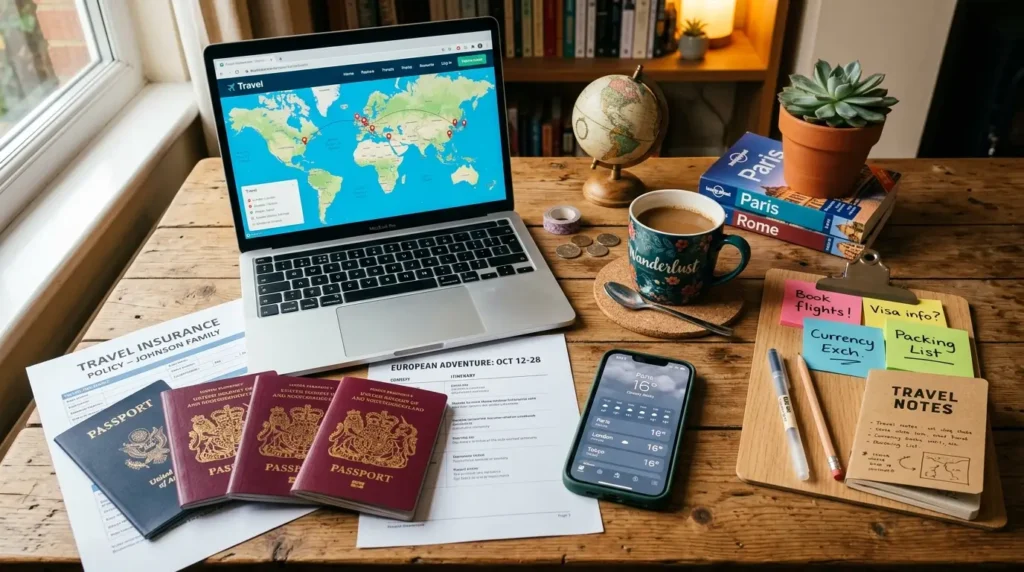
- Register your travel with the STEP Program, which the US State Department operates, in case of emergency, the embassy can contact you.
The whole process can take up to 20 minutes and can be the difference between a manageable crisis and a nightmare.
Also Read: Smart Trips: best family vacation destinations on a budge
The 10 Safest Countries for Family Travel in 2026
1. Iceland
Iceland has been at the top of the Global Peace Index for the last 15 years, and has been top of the list for 16 of the last 16 years. Violent crime makes the news when it occurs because it is a highly unusual occurrence. The healthcare system is excellent and children’s health care is available both in and outside of Reykjavik.
Actually the most surprising thing to most families: Iceland is also really kid-friendly. When driving the Ring Road in summer, virtually all stops will have clean toilets, English signage and food choices that appeal to the picky eater.
The volcanic activity is of concern to people. There was a good reason for that — eruptions in the area near Reykjavik in 2024. The Icelandic Meteorological Office keeps an eye on the situation and the facilities for dealing with the safety of tourists in such a situation are in place. There was no change to the GPI score.
- Best seasons to travel: June – August for driving; December – February for the Northern Lights in Reykjavik, without a car.
- Average daily cost (family of 4): USD $400–$700. It’s expensive. No way around that.
- Tap water: Risk-free all over. Tap water can be consumed straight from the tap, in fact it is one of the purest in the world.
2. Japan
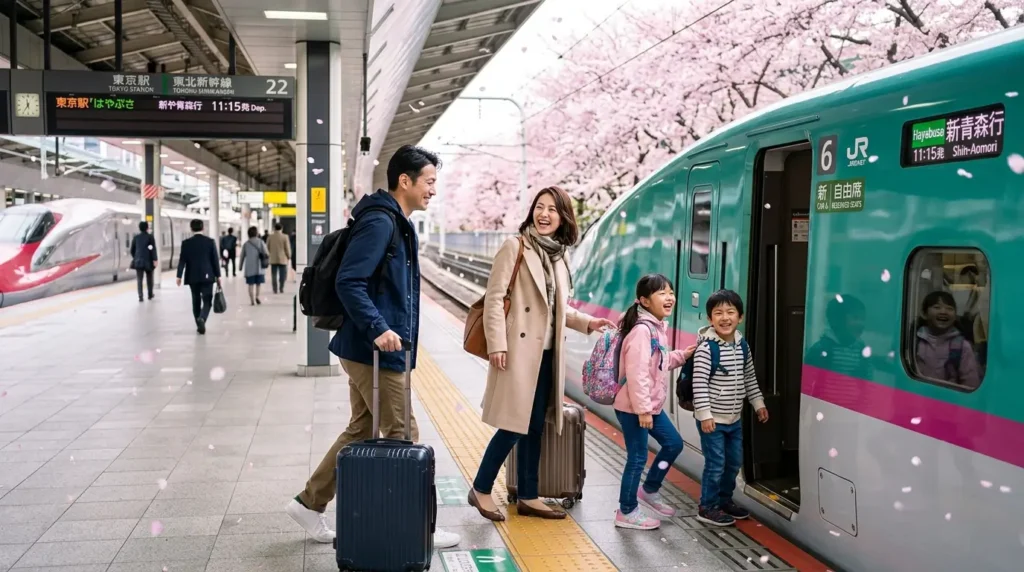
Japan is the consistently best-rated country by parents who have actually done it. The rate of crime is very low. One of the most family-friendly public transport systems in the world is the public transport system, which includes the country’s Shinkansen bullet train system. Strollers fold and fit easily onto a train. No one asks — station staff helps.
Eating conditions are very good. The food hygiene standards are very high in Japan, even the food served in convenience stores is safe. Families with infants have a good supply of infant formula and it is well labeled.
Outside of the major cities, English is only spoken to a small extent, although most tourist facilities in Tokyo, Kyoto and Osaka have English signs and many hotels have English-speaking employees. Download and take Google Translate’s Japanese offline pack with you.
- Best time to visit: Late March – early April (cherry blossoms) or October – November.
- Average daily cost (family of 4): USD $200–$350.
- US State Dept. Advisory Level: Level 1 — Exercise Normal Precautions.
3. Portugal
Portugal is not a close destination, and it is the best value safe Western European destination. There are not many crimes, the health care system (SNS) is good, and the country is really welcoming to children and it does not feel like it has to be or that the country is trying to be.
Biology of the beaches is consistently good in relation to EU standards, there is no strong undertow on the beaches and they are shallow, calm and have lifeguards present throughout the summer season, which is suitable for young children. It’s a place like Sintra, 40 minutes from Lisbon, that kids want to return to.
Portugal is part of the Schengen Zone, an important aspect for EU families as your EHIC/GHIC card will take care of your healthcare expenses at public hospitals. Travel insurance is recommended for travellers from outside the EU anyway.
- Best time to go: May–June or September–October. In the month of August, it’s busy season and prices increase.
- Average daily cost (family of 4): USD $150–$280.
- Tap water: Safe in the cities, some rural areas prefer bottled.
4. New Zealand
New Zealand ranks second in the Global Peace Index, and has ticked off most of the family safety boxes. English is the major language. High quality health care. The main attraction for active families is the natural environment — national parks, clean beaches, geothermal areas.
A straight answer: New Zealand is on the Pacific Ring of Fire and is at risk from earthquakes. The civil defence system in the country is well established to meet this requirement and most tourist centres have well-established emergency protocols. If you’re travelling with very small children or family members who have mobility issues, however, be sure to check individual areas before making a reservation.
Many countries will require NZeTA (New Zealand Electronic Travel Authority). Easy and inexpensive (about NZD $35), but do not overlook it as it is a requirement to board the flight.
- Best season to visit: Summer (Dec–Feb, NZ).
- Average daily cost (family of 4): USD $220–$400.
5. Canada
For North American families looking to add an international flavor without a lengthy flight abroad, the top choice is Canada. Violent crime rates are extremely low in Vancouver, Quebec City, Banff and Prince Edward Island. The quality of hospital care is very high in all major cities.
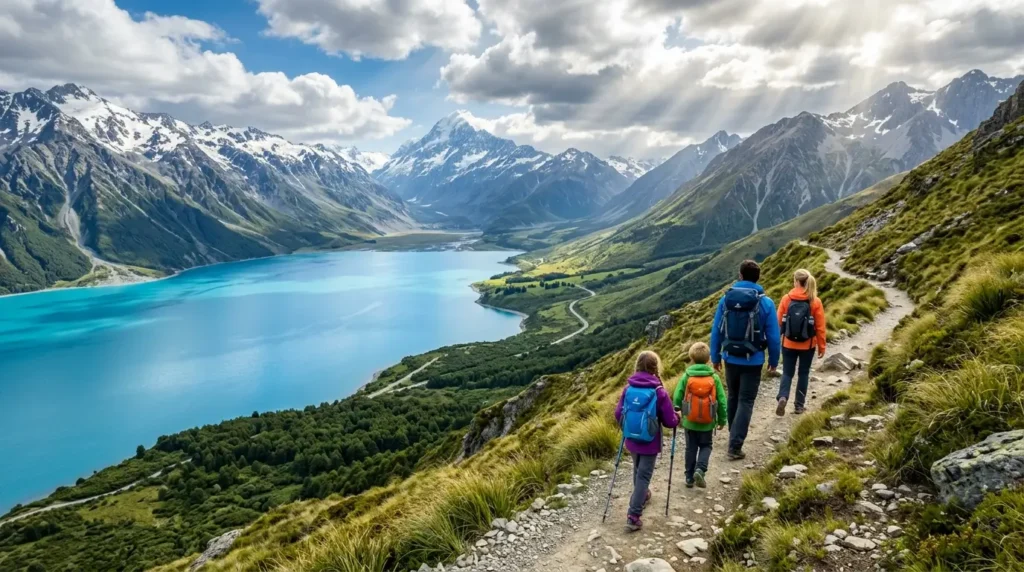
Banff National Park is worthy of special mention to families. It has guided hikes, wildlife spotting (from a distance), fresh mountain air, and fresh scenery that doesn’t require a kid to turn off his or her tablet in order to enjoy. The family programming offered by Parks Canada is adequate.
- Best time to visit: Spring through September. Ski families have it good in the wintertime — Whistler and Banff boast excellent family ski infrastructure.
- Average daily cost (family of 4): USD $180–$350 (very dependent on region).
- US State Dept. Advisory: Level 1.
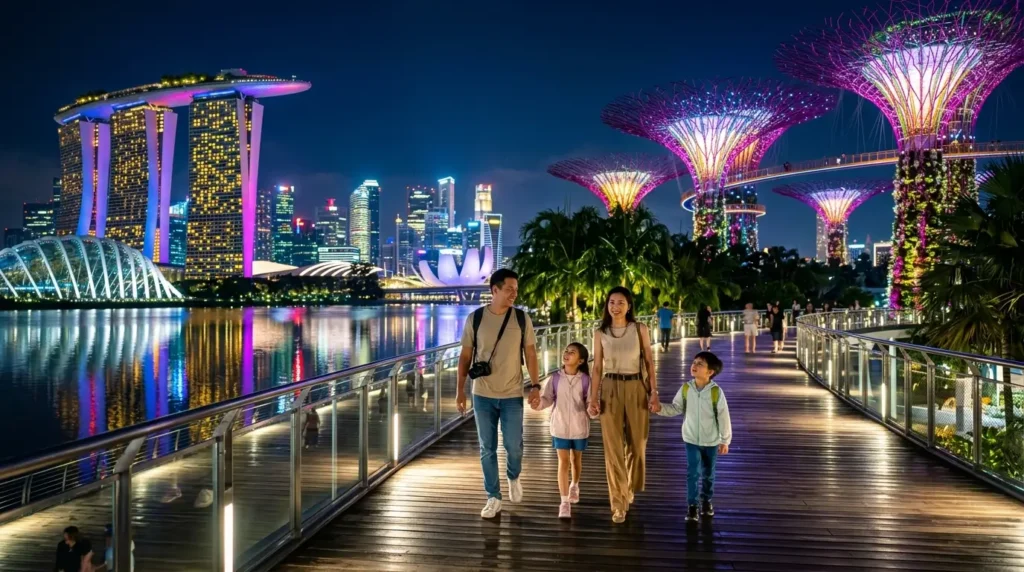
6. Singapore
Singapore is the safest city-state in Asia by a wide margin — Singapore’s GPI score is 1.360, ranking the city in the global top 10. Nearly everyone speaks English, the city is clean and the public transport system is reliable and air-conditioned (important if kids are with you in tropical heat).
One of Singapore’s biggest features about the food situation is one of the best features. Not the street food risk factor you’d consider in some other Southeast Asian cities, Hawker centres offer safe, fresh and affordable food. Unlike many Asian countries, children with allergies can find it easier to eat in Singapore’s restaurants.
There’s one thing to note: Singapore’s laws are very stern. There’s no chewing gum, you can’t get away with littering and drug offenses will result in harsh penalties. This isn’t a safety issue for well-prepared tourists, but brief your older children so it doesn’t become an awkward situation.
- Best time to visit: February–April (slightly drier).
- Average daily cost (family of 4): USD $200–$350.
7. Switzerland
Switzerland has always been in the GPI Top 12 and ranks among the top ten most well-managed countries in the world in the field of family travel logistics. The railway network links virtually all the mountain villages and towns. High quality medical services are provided.
The upside is that Switzerland is a costly place. If you’re traveling with your family of four for a week in Zurich or Interlaken, then you can expect to pay USD $4,000+ for your stay and meals. If you want to spend money, it will be here.
If you have children under 16 and you have a Swiss Travel Pass, be sure to check out Swiss Federal Railways — kids up to 16 are free when travelling with an adult on the half fare card system.
- Best time to go: June, July, August for hiking in the area and December to March for skiing.
- Average daily cost (family of 4): USD $500–$900.
8. Ireland
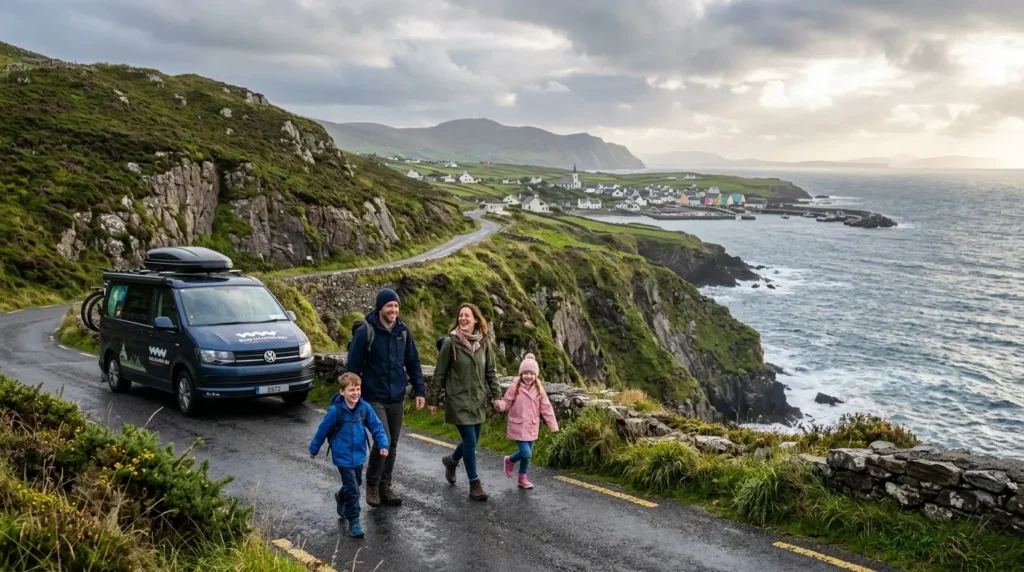
Ireland is not often considered in family safety rankings. English is spoken all over, there is not a lot of violent crime, there is a high quality public health care and the culture is really warm toward kids. Self-drive type trips are easily managed on the road network.
The Dublin, Galway, Killarney and Wild Atlantic Way coast are all suitable for families of various ages. The weather cannot be relied upon — always pack for the rain whatever the forecast is — but this is a comfort problem, not a safety problem.
Irish destinations are as easy as can be to travel to from the UK. No visa, no exchange of money, medical insurance under EHIC card.
- The best season to visit: May to September.
- Average daily cost (family of 4): USD $180–$320.
9. Austria
Vienna has been the best city to live in for six years, according to the Global Liveability Index published by the Economist Intelligence Unit. It is pedestrian friendly, the museums have special children’s programming, and families with strollers find the public transportation very convenient.
Salzburg and the lake district of the Salzkammergut provide clean outdoor environments, which have very low crime rates. In terms of health care, Austria is one of the best healthcare systems in Europe.
- Best days: April–June and September–October (cities) or December (Christmas markets — true magic with children).
- Average daily cost (family of 4): USD $200–$380.
10. Costa Rica
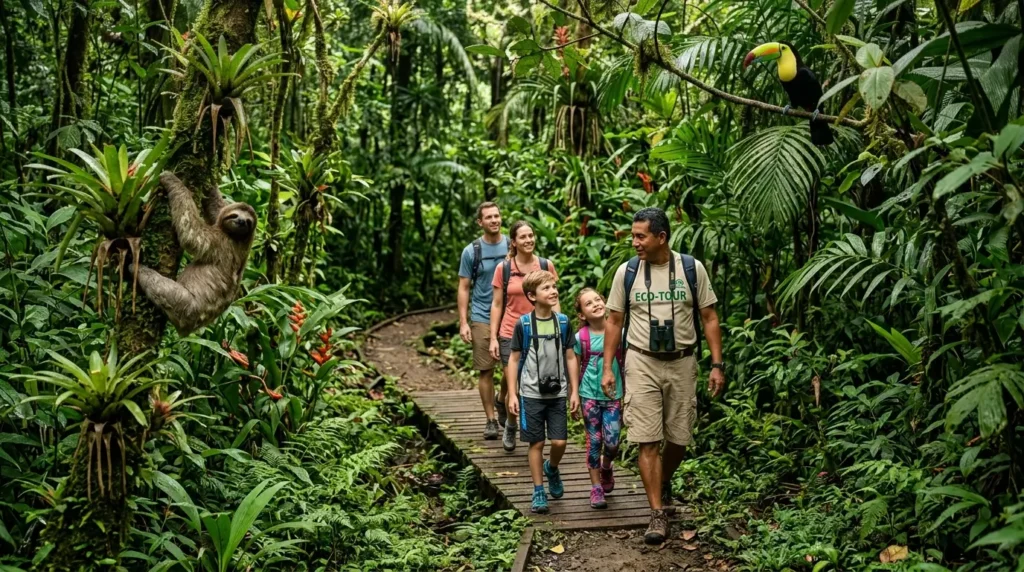
Costa Rica is the place to choose for families that desire adventure, wildlife, and a totally different type of environment, but don’t want to take the high risk. It does not have a standing army, it has a stable democracy, and a solid infrastructure for eco-tourism that accommodates families.
The highlight for younger kids is Manuel Antonio National Park, where sloths, monkeys and toucans are at your doorstep and beaches are peaceful. The general infrastructure of the main areas for tourism (Arenal, Monteverde, Tamarindo) is well developed.
One thing to remember: don’t venture outside of the tourist areas. There is a greater crime rate in urban areas than in the resort areas, and some rural roads are best traversed by 4WD. The overall US State Department Advisory Level for Costa Rica is Level 1 but travelers should take into account the individual region notes located at travel.state.gov when making travel plans.
- Best season to go: December–April (dry season).
- Average daily cost (family of 4): USD $150–$300.
- Drinking water: Safe in main tourist areas; check specific areas.
Safest Destinations by Budget
| Tier | Countries | Daily Cost (Family of 4) |
|---|---|---|
| Budget | Portugal, Costa Rica, Ireland | Under USD $200 |
| Mid-range | Japan, Canada, Austria, Singapore | USD $200–$400 |
| Premium | Iceland, Switzerland, New Zealand | USD $400+ |
A Note for Solo Parents
The safety equation for traveling alone with kids is different. You need places where assistance is available in the unlikely event of an emergency, where it is easy to find someone who speaks English or a language that is commonly used, and where it is not difficult to get your children from place to place or from the airport to the guest house, and where the food is safe to eat.
The top four countries for solo parents are: Japan, Iceland, Portugal and Singapore. There’s no under-estimating how helpful the Japanese are, with strangers helping you with a stroller and a backpack at a train station for instance.
Travel Insurance: What to Actually Buy
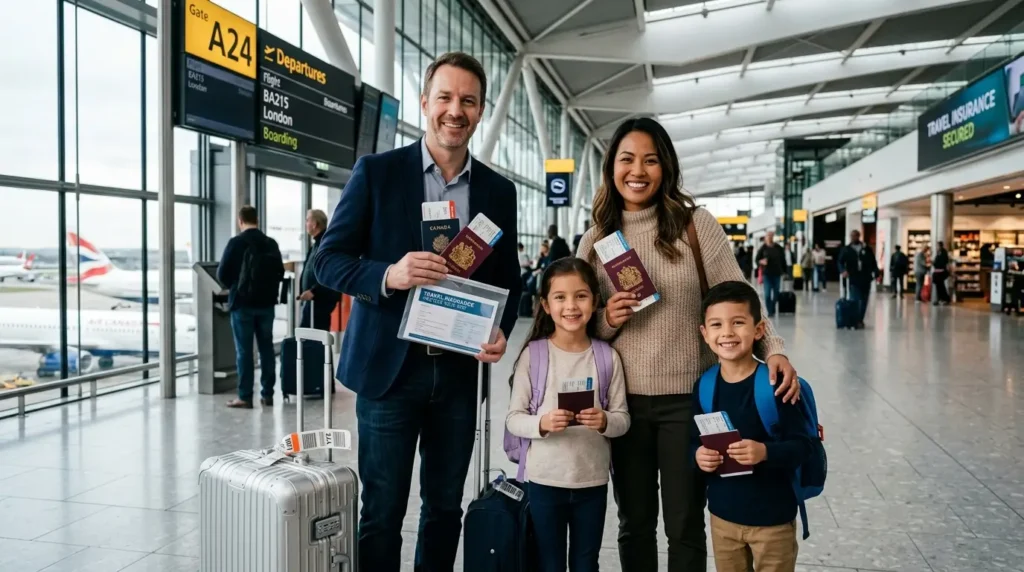
Ignore standard cancellation policies of trips. When travelling internationally with family:
- Satisfactory medical coverage of at least USD $1 million each person.
- Medical evacuation coverage — This can run from USD $50,000 – USD $150,000 depending on the coverage, without insurance.
- If applicable, coverage will be provided for children’s pre-existing conditions.
- Adventure Activities rider: If you are skiing, hiking or participating in water sports, you must wear a helmet.
The following are the best providers to consider: World Nomads, Allianz Travel, AXA Travel, IMG Global and Travel Guard. Compare plans on Squaremouth.com or InsureMyTrip.com. The average cost for a family of four for a 12-day international trip is USD $120–$350 based on the level of coverage and the risk levels of the destination.
Purchase the policy before you book the flights. There are some coverages that are only in effect if booked within a certain timeframe from your first trip deposit.
Vaccinations for Children Traveling Internationally
Visit cdc.gov/travel and pick your destination, it lists required and recommended vaccines, and has a ‘Traveling with Children’ filter.
The vaccines provided to children as recommended in your local country’s childhood immunization schedule are adequate for most of these destinations (Iceland, Japan, Portugal, Canada, New Zealand, Austria, Ireland). If your child is a youngster, and has traveled to Costa Rica or Singapore, it may be recommended that he or she be given further recommendations.
Also Read: Smart Himalayan Travel: solo trekking in Nepal tips and cost 2026
Consult your kiddo doctor or a specialist in travel medicine at least 6 weeks prior to traveling. There are vaccines that must be given in a series of doses that are weeks apart.
Multigenerational Travel: Which Destinations Work Best
Multigenerational journeys with grandparent(s), parent(s) and children have different logistics. Accessible infrastructure is also required and multiple activity levels with a single location, as well as reliable medical care to older travelers.
The top three for multigenerational groups are: Japan, Portugal and Austria. Mobility aids are well catered for in Japan’s mobility system. Portugal offers flat coastal trails and hiking, too. There are no fitness requirements for Austria’s cable cars.
FAQs
What is the safest country to travel to with kids in 2025?
Iceland. It has been the top Global Peace Index for the last ten years, there is little to no violent crime, the healthcare system is good during emergencies and English is widely spoken in tourist-heavy areas. The volcanic activity which some fear has been closely monitored, and has not impacted the GPI score or the safety of tourists.
Is Japan safe for family travel?
Yes, very. Violent crime is one of the lowest rates among large nations in the world, along with Japan. Families, food and public order are all exceptional and in fact travelling with children is easier in this culture than most places.
Is Southeast Asia safe for families?
Is heavily dependent on the location. Singapore ranks among the world’s top 10 countries in terms of safety. The destinations mentioned on this list can be great if you plan ahead; elsewhere, such as Thailand, Bali, Vietnam and Malaysia, food and water safety becomes more challenging, traffic in cities is chaotic, and healthcare is not available outside of major centers. This does not preclude the possibility of this happening, but it does require a little more planning and travel insurance that’s a little tougher.
What US State Department Travel Advisory Level should I look for?
This is what you want to get — Level 1 “Exercise Normal Precautions.” At Level 2, special attention should be paid to the distribution and nature of specific risks. Level 3 — seriously reconsider and Level 4 — do not travel. Look at travel.state.gov — it’s more current and accurate than any travel blog, including this one.
Do I really need travel insurance for a family trip abroad?
Yes. The cost of medical evacuation from Southeast Asia is more than USD $100,000 per person, without coverage! As an out-of-country visitor, even in countries with excellent public health facilities, you may be sent to private facilities. The cost of a family policy for a 2-week trip is USD $120–$350. The calculations are easy to follow.
What vaccines do children need for international travel?
This is dependent on the place. The only vaccines to get up to date for most European, North American and North East Asian destinations are routine childhood shots (MMR, DTaP, varicella, flu). Your doctor or travel medicine clinic will provide you with destination-specific advice for destinations that are tropical. Always use cdc.gov/travel as a reference and go to the doctor.
What is the safest city in the world for families?
Cities at the top of the safety rankings are always Reykjavik (Iceland), Copenhagen (Denmark), Singapore, Vienna (Austria) and Tokyo (Japan). The GPI scores of the countries where the cities of Reykjavik and Copenhagen are located are among the highest in the world. There is virtually no street crime in Singapore. The infrastructure and liveability in Vienna is such that it is truly easy to manage children in.
Is Portugal safe for American and British families?
Yes. The United States State Department’s Travel Advisory for Portugal is Level 1: Low risk. Crime is relatively low, compared to the rest of Western Europe. Families in the UK receive GHIC benefits in public hospitals. The Algarve, Lisbon and Porto are all family friendly regions with English widely spoken.
How do I register with the US embassy before traveling?
Sign up for the Smart Traveler Enrollment Program at step.state.gov for your trip. It is free, takes approximately 5 minutes and will enable the US Embassy nearest you to reach you in a real emergency (natural disaster, political unrest, or family emergency). It is great to do for any travel abroad, particularly travelling with kids.
Before You Book
The list provided above is a beginning one, and not a final decision. The ideal spot for your family to stay depends on your children’s age, budget, origin of your flight, and what “safe” means for your family.
A medically complex child’s family needs are different from a family with a trio of teenagers. A single parent travelling with their toddler will be concerned with different things than a group of 3 generations.
Run the checklist. See the travel warning. Buy the insurance. Book the trip.
The world is big and most of it is safe as long as you do 20 minutes of homework first.